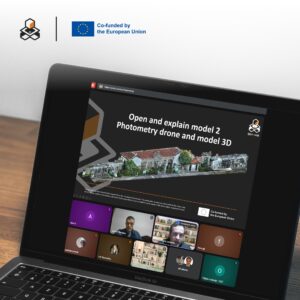
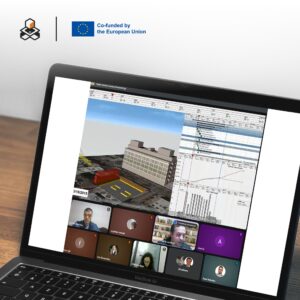
The BIM4WB consortium recently delivered an online capacity-building training session for teaching staff from the Western Balkans, led by an expert from IES Ribeira do Louro, a public VET school recognised for its strong practical orientation and experience in vocational education and training.
The training focused on innovative methodologies for teaching Building Information Modeling in both classroom and laboratory-based learning environments. The session was designed to strengthen the pedagogical, methodological, and professional competences of participating teaching staff, supporting them in the future delivery of BIM-related courses and training modules.
The online format ensured accessibility for participants from different partner institutions while maintaining a strong level of interaction, discussion, and knowledge exchange. Through the session, participants explored how modern teaching approaches can make BIM education more practical, engaging, and aligned with the needs of the construction sector.
Focus of the Training
The session introduced participants to key principles of effective teaching and learning, with particular attention to how these principles can be applied in technical and vocational education. The training highlighted the importance of designing learning experiences that are structured, outcomes-oriented, and connected to real industry needs.
Participants explored the role of learning outcomes in curriculum design and discussed how clearly defined outcomes can support both teaching delivery and student assessment. Particular attention was given to the need for BIM education to combine theoretical understanding with practical application, allowing learners to develop competences that are directly relevant to the workplace.
Innovative Teaching Methodologies
A central part of the training was dedicated to modern pedagogical approaches that can be used in BIM education. Participants discussed several teaching methods, including problem-based learning, computer-based learning, peer-led learning, field-based learning, creative teaching, and storyboard teaching.
These approaches were presented as effective ways to increase student engagement, encourage active participation, and support the development of critical thinking and problem-solving skills. The training also addressed techniques for improving student interaction and motivation, especially in technical subjects where practical application is essential.
Contribution to BIM4WB Objectives
This capacity-building session represents an important contribution to the overall objectives of the BIM4WB project. By strengthening the competences of teaching staff, the project supports the development of high-quality BIM education in Albania and Kosovo.
The knowledge and methodologies shared during the training will help participating institutions design and deliver more effective BIM-related learning experiences. In this way, the session contributes directly to the modernisation of construction education and to the preparation of students and professionals for the digital transformation of the sector.