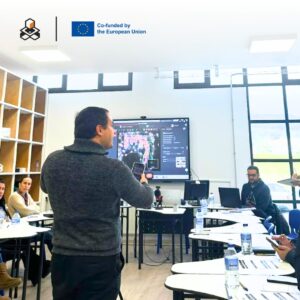
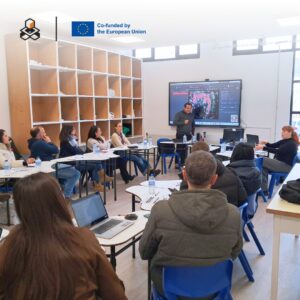
The training addressed the principles of effective learning and the importance of designing educational activities that are clear, structured, and aligned with labour market needs. Participants explored how learning outcomes can guide curriculum development, teaching delivery, and assessment in BIM-related courses.
A particular focus was placed on the connection between education and industry expectations. As BIM is increasingly used in modern construction processes, teaching staff need to ensure that students develop not only theoretical knowledge, but also practical competences that can be applied in real professional environments.
The session therefore supported participants in understanding how to structure BIM-supported lectures, practical exercises, and laboratory-based activities in a way that promotes active learning and professional readiness.
Innovative Teaching Methodologies
During the training, participants explored a range of modern pedagogical approaches that can support the effective teaching of BIM. These included problem-based learning, computer-based learning, peer-led learning, field-based learning, creative teaching, and storyboard teaching.
The methodologies were discussed as practical tools for increasing student interaction, motivation, and higher-order thinking. Participants considered how these approaches can help students move beyond passive learning and become more active in analysing problems, developing solutions, and applying BIM concepts in realistic scenarios.
The training also encouraged participants to exchange their own teaching experiences and discuss how different approaches could be integrated into their future BIM courses.
Contribution to BIM4WB Objectives
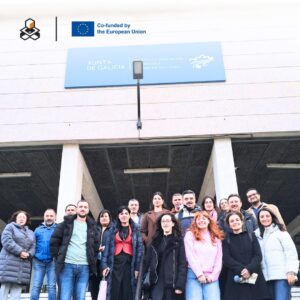
The training in O Porriño represents another important step in the capacity-building process of the BIM4WB project. By investing in the professional development of teaching staff, the project ensures that future BIM curricula and training materials can be delivered effectively and sustainably.
The knowledge gained during the session will support partner institutions in Albania and Kosovo as they prepare to introduce or strengthen BIM education. The activity also contributes to the wider objective of aligning construction education in the Western Balkans with European standards, digital transformation trends, and labour market expectations.
The remaining training sessions will continue to be delivered through a combination of in-person and online formats, ensuring accessibility, flexibility, and continued engagement for all participating teaching staff.