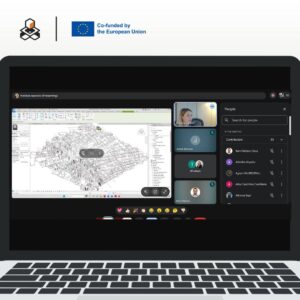
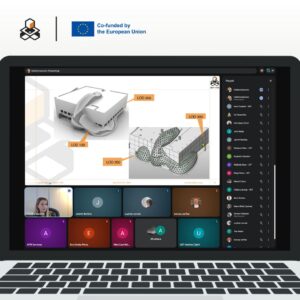
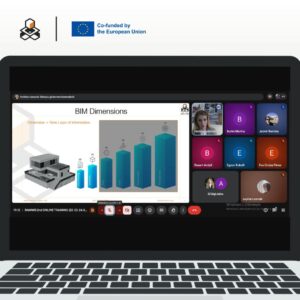
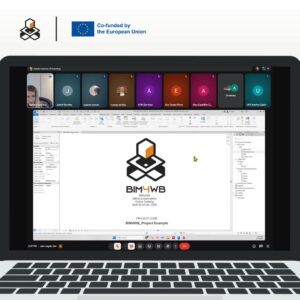
The BIM4WB consortium recently delivered a three-day online training programme led by Balıkesir University, dedicated to Building Information Modeling, sustainability, and the future of digital construction.
The training combined theoretical foundations with practical, hands-on work, supporting participants in developing a stronger understanding of BIM concepts and their application in sustainable construction. The programme was designed to help teaching staff and professionals prepare for the demands of a modernised construction sector increasingly shaped by digital tools, data-driven processes, and sustainability requirements.
Day 1 — Building Information Modeling and Sustainability
The opening day introduced BIM as a digital, information-based approach to building design, construction, and lifecycle management. Particular attention was given to the role of BIM in advancing sustainability in the built environment.
Participants explored the fundamental concepts of BIM and examined how the methodology supports more efficient planning, improved collaboration, better resource management, and environmentally responsible design. The session also introduced key software tools, including Autodesk Revit, Insight, and Forma, through a guided hands-on activity.
Day 2 — Basic BIM Workflow and Sustainability Analysis
The second day focused on the application of a basic BIM workflow using Revit, Insight, and Forma. Participants worked through guided modelling exercises and explored how basic building data can be entered, structured, and interpreted within a BIM environment.
The session introduced core concepts related to energy performance and carbon analysis. Participants examined how digital tools can support early-stage design decisions by providing information on building performance, sustainability indicators, and potential environmental impacts.
Through practical exercises, participants gained experience in interpreting results and understanding how BIM-based analysis can contribute to more informed and sustainability-oriented design choices.
Day 3 — BIM Applications and Future Trends
The final day reflected on the practical experience gained throughout the programme and connected it to broader developments in the construction sector. Discussions focused on the application of BIM in contemporary construction projects and on the integration of BIM concepts into educational settings.
The session also examined emerging trends shaping the future of digital construction, including Digital Twins, the integration of BIM and Artificial Intelligence, and OpenBIM frameworks. These topics helped participants understand how BIM is evolving beyond design and modelling into a wider ecosystem of data-driven construction, operation, and asset management.
Across the three days, the training provided participants with a strong foundation in BIM, a clearer understanding of how digital tools can support sustainable construction, and an informed view of the trends shaping the next generation of construction workflows.
The activity represents another important contribution to the capacity-building objectives of the BIM4WB project and to the wider modernisation of construction education in the Western Balkans.